
Introduction
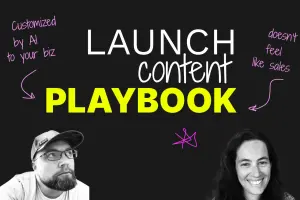
When it comes to launching a new product, service, or course, the difference between a mediocre outcome and a spectacular one often comes down to one thing: content. The content that builds anticipation, nurtures your audience, tells a compelling story and ultimately drives action. That’s exactly what The Launch Content Playbook – Rob Lennon and Erica Schneider sets out to deliver: a structured content-launch blueprint that moves beyond ad-hoc posts and reactive marketing, toward a strategic, scalable launch content system.
In this article we’ll explore how this launch content framework (also called the launch content system, content-launch strategy, and content-playbook for product launches) works, why it matters, how it is built, and how you can apply it to your business or creative endeavour. You’ll gain insight into the launch content methodology, the launch content phases, the templates and content creation process, the distribution and engagement strategy, and how to measure and optimise content around your next launch. Whether you’re a solo creator, a small business, or a marketing team, this guide will help you get the most from a launch content strategy.
1. Why a Launch Content Strategy Matters
Many entrepreneurs make the mistake of thinking that a launch is “just another marketing push” — a flurry of posts, emails, ads, maybe a live event, hoping something sticks. The reality is that the most successful launches are built around a content-driven launch architecture: consistent, strategic messages delivered at the right times, with intent, across channels.
1.1 From Ad Hoc to Systemised Launch Content
When you adopt a launch content framework (or “content launch blueprint”), you shift from the “post when you feel like it” mode to the “we have a content launch roadmap” mode. The Playbook created by Rob Lennon and Erica Schneider emphasises this transition: you define content themes, hooks, story arcs, platforms, timing—so that every piece of content supports your overall launch narrative.
1.2 Building Momentum and Engagement
Effective launch content isn’t just about promoting; it’s about building a story, engaging your audience, educating them, priming them, and then converting them. A well-executed content-launch sequence fosters anticipation, nurtures trust, drives action. A content-launch strategy that has pre-launch, launch, and post-launch phases ensures you’re not just firing off messages but orchestrating a journey.
1.3 Scalability & Repeatability
If you rely on ad-hoc tactics, each launch looks and feels different—and you’ll struggle to scale, replicate and optimise. The launch content system (or launch content playbook) offers repeatable templates, frameworks, and workflows so that each new product launch gets faster, smoother, and higher-impact. Rob Lennon and Erica Schneider’s model integrates this concept of a scalable content-launch machine.
2. The Key Components of a Launch Content Framework
To implement a launch content strategy properly, you’ll need to understand the core components. The Playbook by Rob Lennon and Erica Schneider breaks these down into practical building blocks: content design, audience mapping, content calendar, hook strategy, platform selection, distribution plan, metrics and iteration.
2.1 Audience & Offer Mapping
Start by defining who you are launching to (target audience) and what you are launching (offer). A content-launch blueprint always begins with clarity: what’s the customer’s problem, what’s the promise, what are the differentiated benefits? This step ensures that every piece of content in your launch relates to a specific part of your target’s journey.
2.2 Content Themes & Story Arcs
Your launch content should be organised into themes: e.g., “Problem recognition,” “Solution education,” “Social proof,” “Cart open / urgency,” “Post-launch reinforcement.” The “launch content playbook” concept emphasises these phases to keep messaging consistent and purposeful.
2.3 Hook Strategy & Content Formats
Rob Lennon and Erica Schneider’s model emphasises strong hooks, formats (blogs, emails, social posts, live streams), and content sequence. A content launch package might include: teaser posts, countdown emails, case-study videos, live Q&A, cart-closing pieces. The hook strategy ensures each piece grabs attention and draws the viewer into the narrative.
2.4 Content Calendar & Distribution Plan
Mapping the content calendar is crucial: when to publish what, on which channel, and how it connects. The launch content process covers distribution scheduling across social, email, blog, and ads, with reminders, downtime, and follow-up built in.
2.5 Metrics, Feedback & Iteration
The final component is measuring performance of your content: engagement rates, click-throughs, conversions, sentiment. The “launch content system” must include feedback loops so you can refine your next launch. Rob Lennon and Erica Schneider emphasise optimizing your launch content machine with data.
3. The Three Phases: Pre-Launch, Launch, Post-Launch
One of the distinguishing features of this content-launch methodology is the phase model: plan your content in three main blocks.
3.1 Pre-Launch Phase
This is where you build awareness, plant ideas, create anticipation. Typical content includes “coming soon” teasers, problem-aware posts, case-study previews, value-driven content without overt sales. Using the launch content playbook mindset, you would generate hooks like “What most creators miss before a launch,” “Why preparation is the secret to success,” and position your audience for the upcoming offer.
3.2 Launch Phase
Here the offer is live. Content transitions to cart open messages, urgency, social proof, live events, behind-the-scenes, testimonials, Q&A. The launch content strategy ensures your content feels high-energy but still value-led—not just salesy.
3.3 Post-Launch Phase
After the cart closes (or whatever stimulus ends), you pivot content to fulfilment, celebrating clients, case studies, next-step offers, and feedback loops. The launch content system emphasises this phase to maximise lifetime value, reduce churn, and build momentum for the next cycle.
4. Why the Playbook from Rob Lennon & Erica Schneider Stands Out
While there are many generic “launch” resources, the version created by Rob Lennon and Erica Schneider offers several unique advantages.
4.1 Tactical, Content-First Orientation
Instead of focusing merely on “sales funnel” or “traffic,” this course places a central emphasis on content as the driver of the launch. This content-first orientation ensures integration between story-telling, platform, timing and offer.
4.2 Templates, Frameworks & Streamlined Execution
The playbook provides ready-to-use templates for emails, social posts, blog posts, landing page copy, etc., plus frameworks for hook creation, sequence mapping, and distribution. This speeds up execution and reduces guess-work.
4.3 Systems and Scalability
Because the framework is repeatable and built with process in mind, you’re not reinventing the wheel every time. The content-launch machine becomes smoother with each cycle. Rob Lennon and Erica Schneider’s model emphasises systemisation of content for launches.
4.4 Emphasis on Genuine Engagement (Not Just Sales)
The launch content paradigm taught in this playbook emphasises value first, build trust, engage audience—instead of a hard-sell blitz. Many creators respond well to this approach, especially those who dislike “pushy” marketing.
5. How to Apply the Framework to Your Own Business
You don’t need to be a big team or have a massive budget to apply this approach. Here’s how you can adapt a content-launch blueprint in your own context:
Step-by-Step Application
-
Clarify your offer: What are you launching? What problems do you solve?
-
Map your audience journey: Where is your audience now? What content will move them closer to conversion?
-
Define your content themes: Pre-launch, launch, post-launch.
-
Create hooks and formats: Write posts/emails/videos around these themes. Use the template or framework from the playbook.
-
Schedule & distribute: Use the tool of choice (social platform, email provider, blog) with pre-planned publication.
-
Measure performance: Set KPIs (open rates, engagement, conversion). Use data to optimise.
-
Repeat & refine: After the launch, document what worked, what didn’t, build your next launch content machine.
Tips for Best Results
-
Keep your content audience-centric: speak to their problem, values, aspirations.
-
Use storytelling, case studies, social proof to build trust.
-
Vary content formats: blog posts, videos, live streams, emails, social carousels.
-
Don’t leave post-launch to chance—this phase often unlocks upsells, loyalty, referrals.
-
Use content you can repurpose: a long blog becomes snippets, a video becomes posts, etc.
-
Automate where possible but maintain human voice.
6. Common Mistakes to Avoid in Content Launches
Knowing what not to do will help you avoid derailment. Here are pitfalls against the launch content plan:
-
Too much sales language too early: If every email or post screams “buy,” your audience may tune out.
-
No narrative or story: A launch without a story feels disconnected. Use content to link problem → solution → transformation.
-
Random posting: Without a content calendar aligned to launch phases, your messages will feel haphazard.
-
Ignoring metrics: If you don’t track engagement and conversion, you’ll miss signals for optimisation.
-
Neglecting post-launch content: If you let the momentum drop after cart close, you lose clients, referrals, and future potential.
7. Measuring Success and Optimisation
A robust launch content system includes measurement and iteration. Here are key performance indicators to track:
-
Content reach and impressions (especially on social)
-
Engagement rate (comments, shares, replies)
-
Click-throughs from content to landing page or opt-in
-
Conversion rate of leads to buyers
-
Revenue per channel or content piece
-
Return on ad spend (if promoting content)
-
Retention or repeat sales in post-launch phase
By evaluating these metrics, you’ll refine your next content-launch strategy. Over successive launches you’ll build what the Playbook refers to as your “launch content machine” that gets more efficient and effective.
8. Real-World Scenario: Using the Launch Content Playbook
Let’s walk through an example: Imagine you’re launching an online course next quarter. Using the content-launch framework you:
-
Pre-launch: Publish blog post about the pain your audience faces (“Why your content never leads to sales”), post teaser videos on social, send an email sequence building interest.
-
Launch week: Social challenge, live Q&A, countdown posts, case-study email, cart-open announcement.
-
Post-launch: Share client testimonials, “what’s next” email, content on next-step offer, ask for feedback.
Each content piece aligns with a template from the Playbook, distributed through the calendar, measured, optimised. Over time you build a library of launch content that you adapt for each new offer. This is exactly the kind of system Rob Lennon & Erica Schneider teach.
9. Long-Term Value of a Content-Launch Framework
Once you adopt this structured launch content system, the value doesn’t stop after one launch. You’ll develop:
-
A repertoire of templates and content assets
-
Improved messaging clarity and brand voice
-
Analytics and insights to refine future launches
-
A repeatable launch process that can be delegated or outsourced
-
Greater credibility and trust with your audience, because they see you as consistent and professional
In short, you’re not just launching a product—you’re building your brand’s launch engine. That’s the power of a launch content playbook approach.
Conclusion
Launching is never simply about the moment the cart opens—it’s about the content journey you craft before, during, and after. With the content-launch framework pioneered by Rob Lennon and Erica Schneider in The Launch Content Playbook, you gain the blueprint, templates, and strategic system to execute high-impact launches filled with intention and results.
If you’re ready to elevate your next launch—build more engaging content, produce meaningful engagement, drive conversions, and scale your launch system—this approach gives you the roadmap. Use the content themes, structure your phases, measure the outcomes, refine the process—and you’ll look back on your launch not as a flurry of activity, but as a well-orchestrated journey that connected with your audience and delivered the outcomes you wanted.



Reviews
There are no reviews yet.